Reading labels
Grass-Fed vs. Grass-Finished Beef: What the Labels Mean
By The Okmok team ·
Grass-finished means cattle ate grass and forage right up to the end, not just early in life. "Grass-fed" on its own can be used more loosely. The clearest signal is an independent certification: Okmok beef is certified by the American Grassfed Association, meaning the cattle live on grass and forage their whole lives with no grain, no antibiotics and no added hormones.
Why the labels are confusing
Almost all cattle eat grass at some point. Calves graze alongside their mothers before they are weaned. The real question on a beef label is what happens after that: do the animals stay on grass and forage for their whole lives, or are they moved onto grain to put on weight before processing?
That is why two packages can both mention grass and still describe very different animals. Words on a label are only as useful as the standard behind them.
This guide stays at a high level. It explains what the common terms are generally meant to signal, what to look for when you compare products, and exactly how our own cattle are raised, so you can judge for yourself.
What "grass-fed" usually means
Used carefully, grass-fed means the animal’s diet was grass and other forage. Used loosely, it can mean the animal ate grass for part of its life. On its own, the phrase does not always tell you how the animal was finished, whether it spent time in a feedlot, or what else it received along the way.
What "grass-finished" adds
Grass-finished speaks to the end of the animal’s life, the period when many cattle are switched to grain. A grass-finished animal stayed on grass and forage through that period too. You will sometimes see "100% grass-fed" used to mean the same thing: grass from start to finish.
Of the two terms, grass-finished is the more specific one. If a package says grass-fed but does not mention finishing or a certification, it is worth asking the seller directly how the animals were raised in their last months.
Why certification matters
The most reliable way to know what is behind a label is a third-party certification with its own standard. Okmok’s herd is certified by the American Grassfed Association (AGA) and is USDA-certified organic. In plain terms, for our cattle that means:
- Grass and forage for their entire lives. No grain, ever.
- No antibiotics.
- No added hormones.
- Raised on pasture, not in feedlots.
If you want to see certification documents, email support@aleutianbeef.com and we will send them.
How Okmok cattle actually live
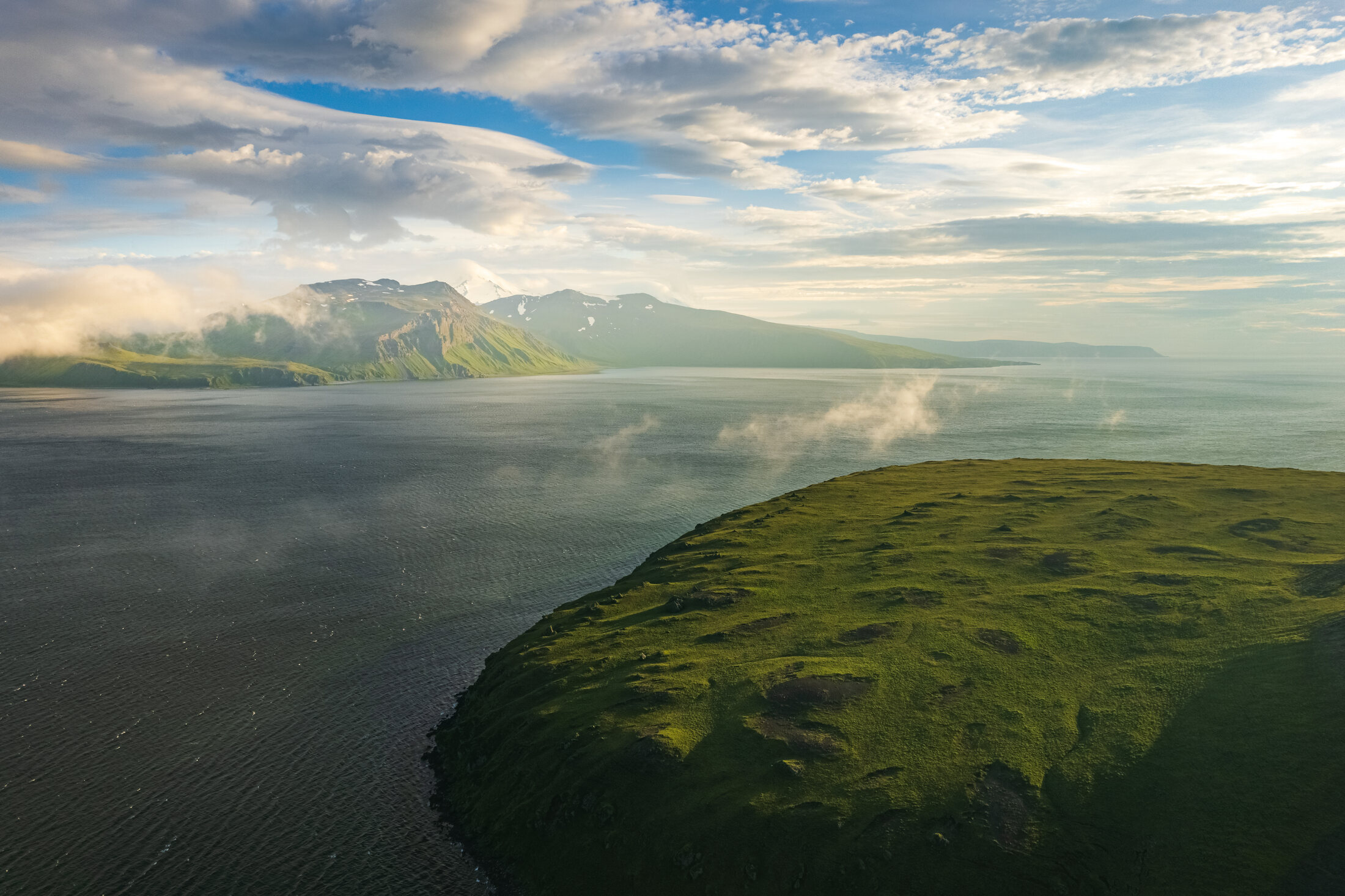
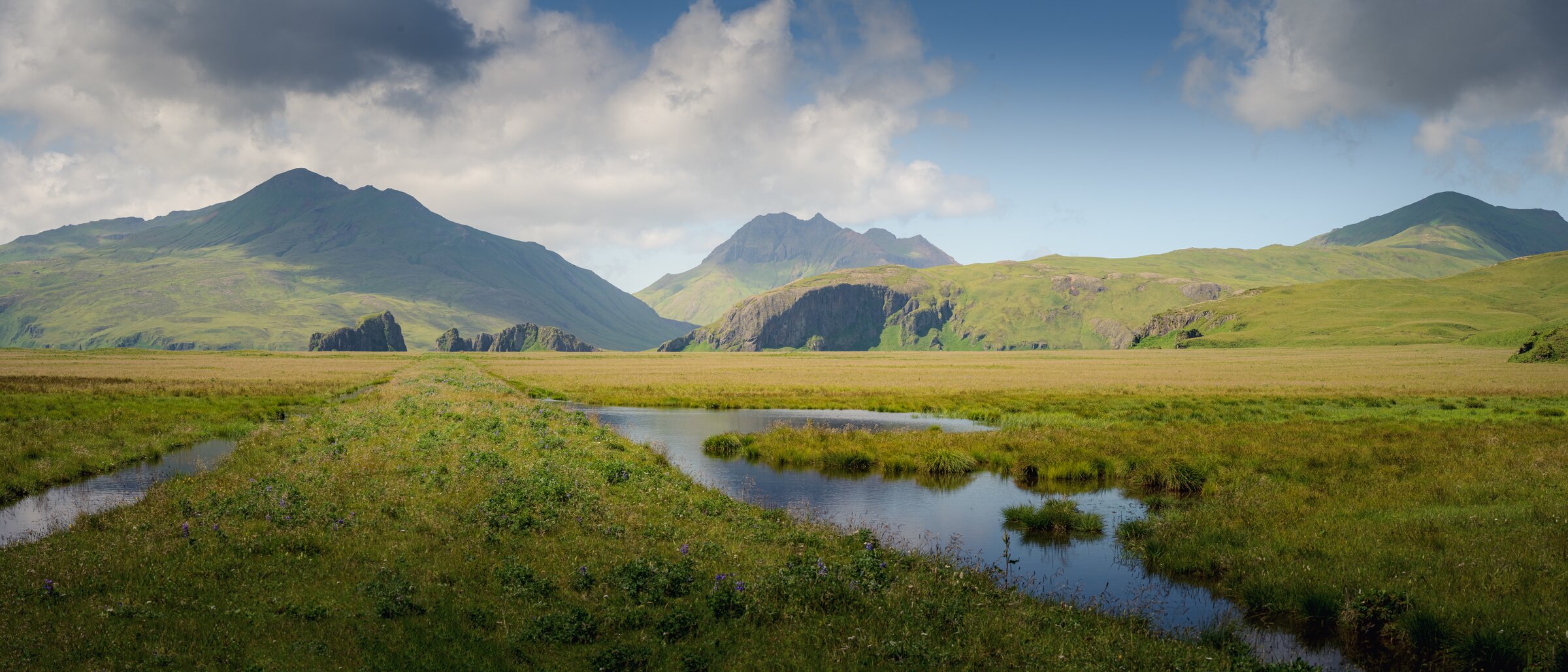
Our cattle live on Umnak Island in the Aleutian chain, between the Pacific Ocean and the Bering Sea. The island is volcanic grassland with no trees: unbroken grass, fireweed and lupine from the coast up to the caldera. The ocean tempers the climate, so Umnak never reaches the deep freeze of mainland Alaska, and the cattle graze on grass year-round.
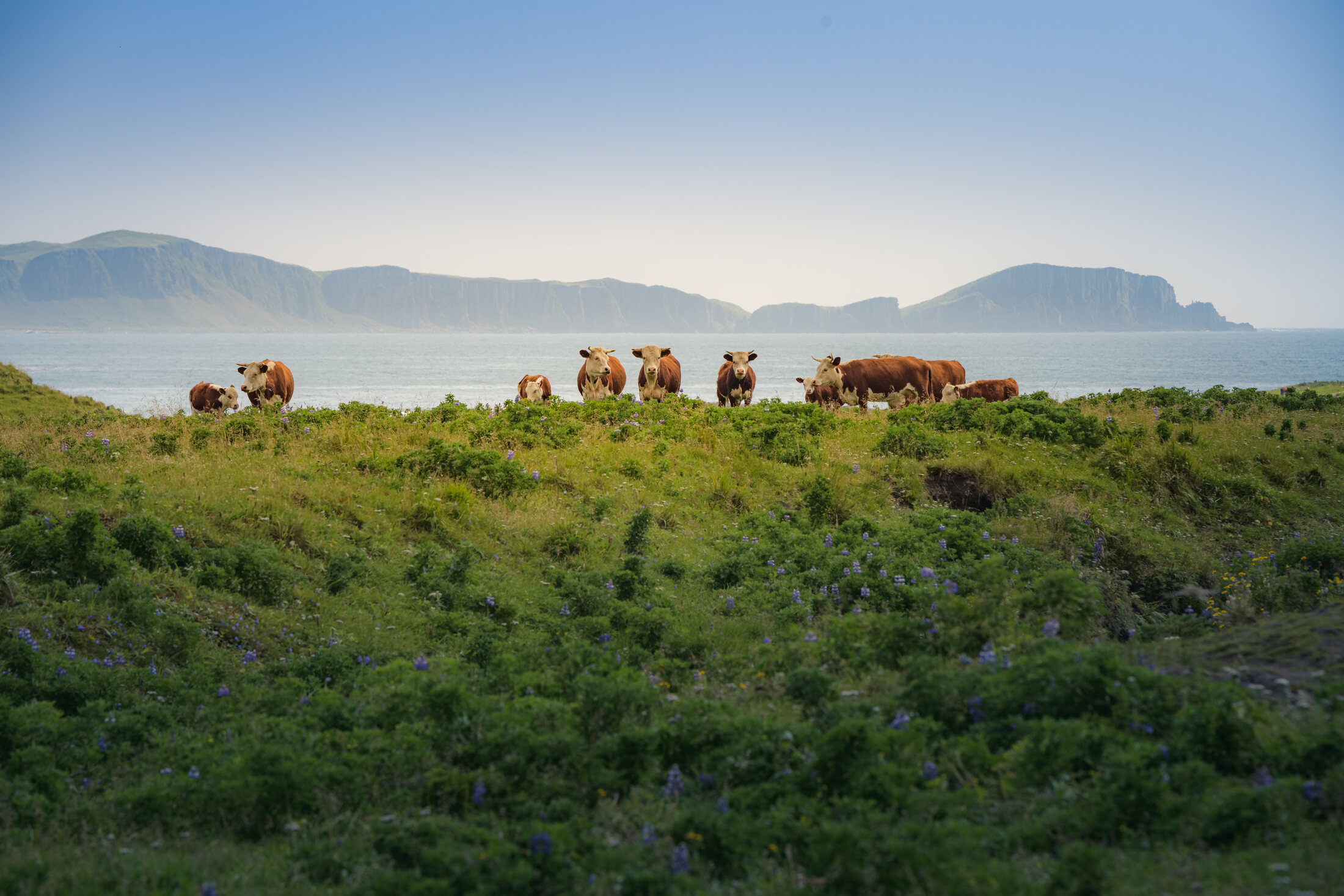
The herd ranges across more than 500,000 acres of leased Native Corporation land. There are no feedlots on the island and no grain is brought in for the cattle. Grazing is managed to match how fast the land recovers, and herds are kept off nesting grounds and streams.
When an animal is ready, it is processed at our USDA-certified facility at Fort Glenn, on the island, miles from where it grazed. That keeps transport short and keeps the whole process, from pasture to pack, under one operation.
The herd has been closed for nearly 50 years, so no outside animals are brought in. Over a century on the island, the cattle have become cold-tolerant and well suited to living on grass all year. That matters for a grass-finished label: the animals are not adapted to a feedlot diet because they have never needed one.
The film
The Island Herd
Hereford and Chirikof Island cattle living wild on Umnak Island, a closed herd for nearly 50 years. Filmed on the island, with an original score.
Questions to ask any beef seller
Whoever you buy from, a few questions cut through most label confusion:
- Did the animals eat grass and forage for their whole lives, including the finishing period?
- Were they ever in a feedlot or fed grain?
- Were antibiotics or added hormones used?
- Who certifies the claims, and can I see the certificate?
For our answers to those and more, see the FAQ on How It Works, or read about the island on Our Ranch. To understand the herd itself, read Chirikof Island Cattle.